Four days for month-end. You’ve done the math — it’s costing more than Upgear.
GSTR B2B, B2CL, and B2CS generate natively. IRN runs directly against the government e-invoicing portal — no ClearTax layer. Trial Balance, Cashbook, and Party-wise Outstanding are live, not end-of-month Excel assemblies. Upgear is the Business OS for the accountant who’s been reconciling tools for eight years running.

Four recurring frictions your current stack charges you every month.
If you’ve been running a service business’s books on Tally + ClearTax + CRM exports + Excel, these four moments are the shape of your month. The point of this page is to name them first before pitching anything.
Month-end. Invoices extracted from the CRM to Excel. Excel reconciled against Tally. Data copy-pasted into ClearTax for IRN, per-invoice, one at a time. Your ops lead confirms the Outstanding report three times because it changes each time the CRM sync runs.
GSTR-1 filing. The B2B sheet is 94 rows, each built by hand from the CRM, the IRN portal, and Tally. One mismatched GSTIN and the client’s ITC goes wrong. You’ve triple-checked; you still feel uneasy.
The sales person changed an invoice date three days after creation. You don’t know yet. You’ll find out when the customer calls about the revised IRN. You’ll redo the cancellation and regeneration; you’ll also redo the tracking spreadsheet. There’s no audit log — only memory.
You maintain two Tally files, two CRM logins, two separate GSTR-1 workflows. The owner wants a consolidated P&L for the group. You build it in Excel once a quarter. Takes two afternoons. Is only as current as the day you built it.
Same GSTR-1 deadline. Same two GSTINs. Same pickiness about reconciliation. A different tool carrying the reconciliation tax.
The same four frictions, each resolved at the data layer.
GSTR B2B report generates natively. The numbers come from the same database the invoices live in. IRN was attached at creation time — no copy-paste to ClearTax. Outstanding reconciles because there’s one source of truth. Month-end is a half-day, not three.
GSTR-1 B2B, B2CL, and B2CS are all prepared. You export directly — or hand-verify inline on screen. One-click check against the IRN status for each row. The mismatch risk is replaced by the verification click.
Every invoice edit is captured in the audit trail — who, what, when. You see the sales person’s date change in the data audit log. Cancel-and-regenerate IRN is one menu action. No side-tracking spreadsheet.
Two company records in Upgear, separate GSTINs, separate P&Ls. Switch reporting context from the dashboard to see either entity. Consolidated view is a toggle. The group P&L is live, not an Excel.
Six workflows that shift your month-end from “reconcile and recover” to “verify and file.”
The month-end GSTR-1 workflow runs inside Upgear. B2B (invoices to GSTIN-holding customers), B2CL (B2C > ₹1 lakh), B2CS (B2C ≤ ₹1 lakh) — all produced without exporting to ClearTax. Your accountant verification click replaces the reconciliation loop.
IRN generation, cancellation, and reporting flows run directly against the government e-invoicing portal. Your IRN number is attached to the invoice at creation time — no logging into a separate portal, no copy-paste.
Close-the-books grade reports. Trial Balance with ledger groups. Cashbook date-wise with running balance. Bank statement for reconciliation against actual bank records. Party-wise Outstanding with 30/60/90 aging. All live, all from the same database.
Cash In, Cash Out, Bank In, Bank Out, Journal. Link vouchers to invoices for payment reconciliation. Indian payment modes (UPI, NEFT/RTGS/IMPS, Cheque, Cash, Card) captured on every receipt. The month’s transactions reconcile without a spreadsheet buffer.
Day 1 of migration: upload aged receivables via the opening-balance import (preserves original invoice numbers, TAX, TDS). Upload starting inventory via the opening-stock import per-branch. Your opening balances reconcile with Tally cleanly.
Two legal entities with separate GSTINs run in one Upgear workspace. Each has its own company record, letterhead, invoice signature, financial-year start. Reports scope to one company or consolidate across both. The accountant’s "switch login and redo" pattern ends.
The two screens that close your month-end.
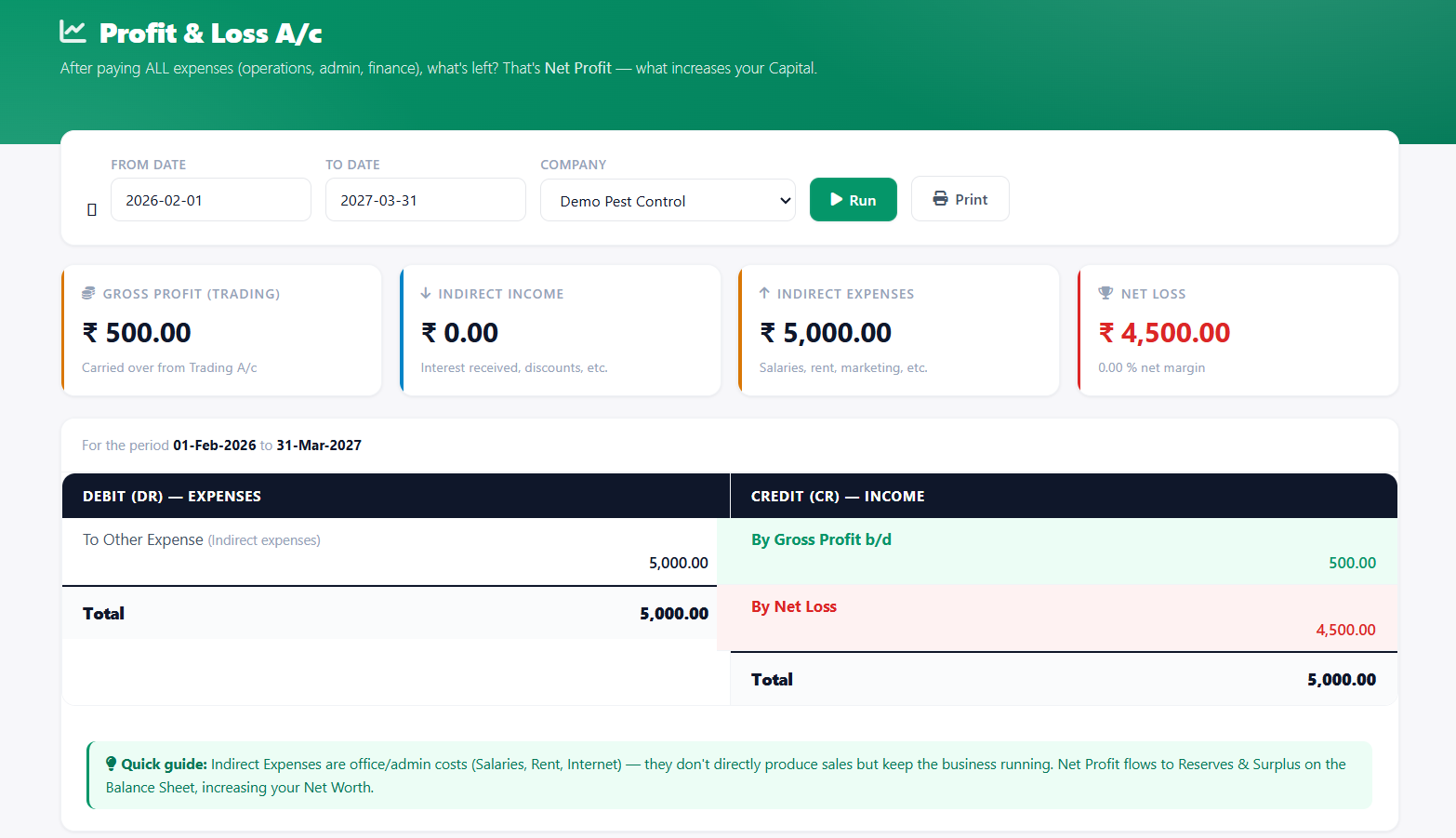
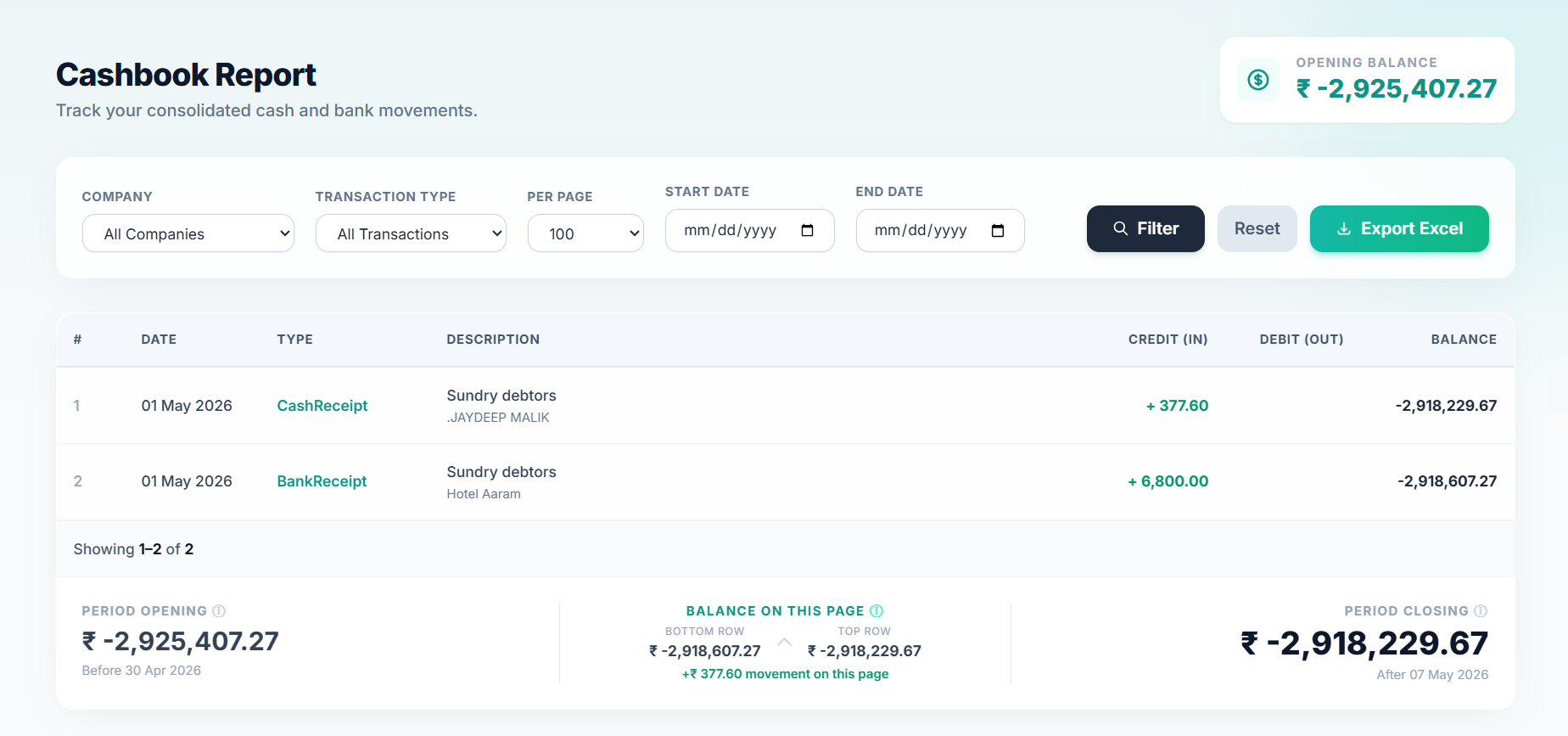
Four subtractions that take 3 days of month-end down to 6 hours.
IRN generation, cancellation, and reporting flows run directly against the government e-invoicing portal. No ClearTax subscription (₹15–30k/year saved). No monthly export ritual.
B2B, B2CL, B2CS generate natively from the invoice database. Your month-end day one becomes a verification click, not a reconciliation.
Every change — who, when, what — is captured in-system across almost every record. Who changed the invoice date three days after creation? One click, not an investigation.
Multi-company in Core means both legal entities share the workspace. Consolidated P&L is a dashboard toggle. The quarterly Excel-assembly exercise ends.
The first GSTR-1 filing from Upgear is the honest test.
Week 1: Opening balances imported (customer receivables preserved with TAX/TDS). Opening stock imported per branch. Your Tally baseline and your Upgear baseline reconcile — if they don’t, we fix the diff before cutting over.
Week 2: New invoices flow through Upgear with IRN generated at creation. You stop the parallel ClearTax ritual after three or four clean IRNs. Sales and finance see the same receivables dashboard.
Week 3–4 (month-end): First GSTR B2B generated from Upgear. You verify line-by-line against the prior month’s ClearTax output. Mismatches in practice are near-zero; the few we’ve seen come from customer-master cleanup (wrong GSTIN on file) rather than the pipeline.
Month 2+: Month-end takes 4–6 hours instead of 3–4 days. The difference is the three days of reconciliation that no longer happen. Your CA gets a cleaner Tally CSV than they’ve ever had from you.
Core includes the GST, IRN, GSTR, and Tally-export workflows. The math usually writes itself.
- ✓ GST e-invoice (IRN) direct to government portal
- ✓ Multi-company (separate GSTINs)
- ✓ 49 dashboards · 11 transactional WhatsApp events
- ✓ Free assisted migration · Data export on cancel
Most operators in this category start with Core only and never add an addon. The three available addons (WhatsApp Marketing, AI Copilot, Photo Attendance) are there if you grow into them.
What accountants verify before they recommend Upgear.
See your month-end running in Upgear, on your own ledger.
30-minute demo, founder-led. Bring your last month’s GSTR B2B sheet + one Tally export + a couple of invoice PDFs. We’ll show you the Upgear version of each by the time we hang up — and you’ll know whether the month-end math actually checks out.